
The Moment You Notice
You're backing out for work, or pulling in out of an afternoon downpour, and you hit the remote. Nothing. Or the opener hums but the door doesn't move. Or it lurches up six inches and stops. Whatever the exact moment, your stomach drops a little, because now the car's trapped, or the house is open to the weather, and you're not sure if this is a five-minute fix or a five-hundred-dollar one.
The good news: a garage door that won't open almost always points to one of a handful of causes, and a technician checks them in a specific order, cheapest and safest first, so you're not paying to replace a motor when the real problem is a $20 part.
What You're Seeing (And What It Tells You)
- Complete silence when you press the remote or wall switch usually means power, not mechanics.
- A hum or click with no movement usually means the opener has power but something downstream is blocked or broken.
- The door opens a few inches then reverses or stops often points to the safety sensors.
- The door won't move even when you pull the manual release and lift by hand is the clearest sign of a spring or cable problem, and it's the one symptom that should stop you from forcing anything further.
- One side looks lower, crooked, or the door looks slightly off the track points to rollers or a track issue, often after storm winds or heavy use.
The Order a Technician Checks Things
1. Power to the Opener
Before touching anything mechanical, check that the opener is actually getting power. Garages in this area take a lot of humidity and the occasional power blip from storm season, and it's common for a unit to get accidentally unplugged, or for a breaker to trip, especially if the garage shares a circuit with other outlets. A quick test: does the opener's light turn on at all? No light, no hum, check the outlet and breaker first.
2. Remote vs. Wall Switch
Next, try the wall-mounted switch inside the garage instead of the remote. If the wall switch works but the remote doesn't, the fix is as simple as a battery or a reprogram, not a repair call. If neither works, move on.
3. Safety Sensor Alignment
Every opener built in the last few decades has two small photo-eye sensors a few inches off the ground on either side of the door. If they're misaligned, dirty, or one has a cobweb or glare across the lens, the opener will refuse to close the door, or will reverse it, as a safety measure. These sensors get knocked out of alignment more than people expect, a bumped ladder, a stored bike leaning against the track, or just normal settling of the house. Humidity and condensation can also fog the lenses on muggy mornings. This is a two-minute check and often the whole fix.
4. Broken or Weakened Spring
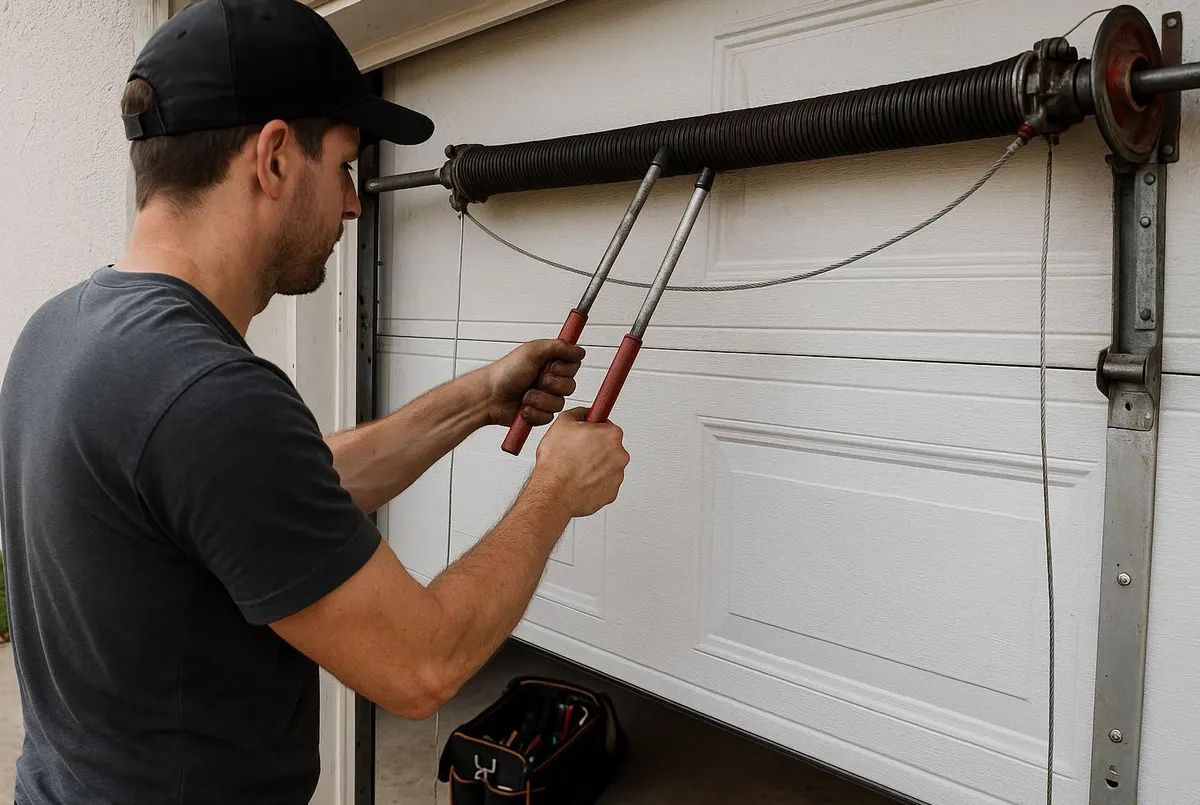
If the door won't move even with the manual release pulled and you're lifting by hand, stop and look up at the spring above the door. A visibly snapped spring, or a gap in the coil, confirms it. Springs carry the full weight of the door and wear out from cycle count, but humidity and salt-tinged air near the coast also speed up rust, which weakens the metal faster than inland garages typically see. Do not attempt to adjust or replace a garage door spring yourself; it's under enough tension to cause serious injury, and this is squarely a job for a trained technician.
5. Cable Off the Drum or Frayed
Cables run alongside the springs and can slip off the drum or fray from rust, especially in garages exposed to salt air or where moisture collects around the bottom bracket. A cable that's jumped the drum will often show up as the door hanging crooked, one side lower than the other, rather than a total refusal to move.
6. Rollers Off Track
After a hard storm or just years of use, rollers can jump the track, especially if humidity has caused wood panels to swell and bind against the track rails. You'll usually see a visible gap between the roller and the track, or hear a grinding sound right before the door stops.
7. Opener Motor or Gear Failure
Last on the list, because it's the least common cause relative to how often people assume it: a stripped drive gear, a worn-out capacitor, or a motor that's simply reached the end of its life. If everything above checks out, power is fine, sensors are aligned, springs and cables are intact, rollers are on track, and the door still won't move, the opener itself is the likely culprit.
When to Call Glen Saint Mary Garage Door Service
If you've checked power and the wall switch and you're still stuck, especially if the door won't budge by hand or looks crooked on one side, stop troubleshooting and call us. Broken springs and slipped cables are two of the most common reasons doors seize up around Macclenny, Sanderson, and the rest of Baker County, and both involve stored tension that isn't safe to handle without the right tools. Our Garage Door Spring Repair and Garage Door Cable Repair services get the door moving again the same visit in most cases, and we'll check the opener and sensors while we're there so you're not calling back next week for a second issue.
If your garage door in Glen Saint Mary, FL won't open, give Glen Saint Mary Garage Door Service a call. We'll find the actual cause and have your door working safely again, no guesswork, no upsell.