
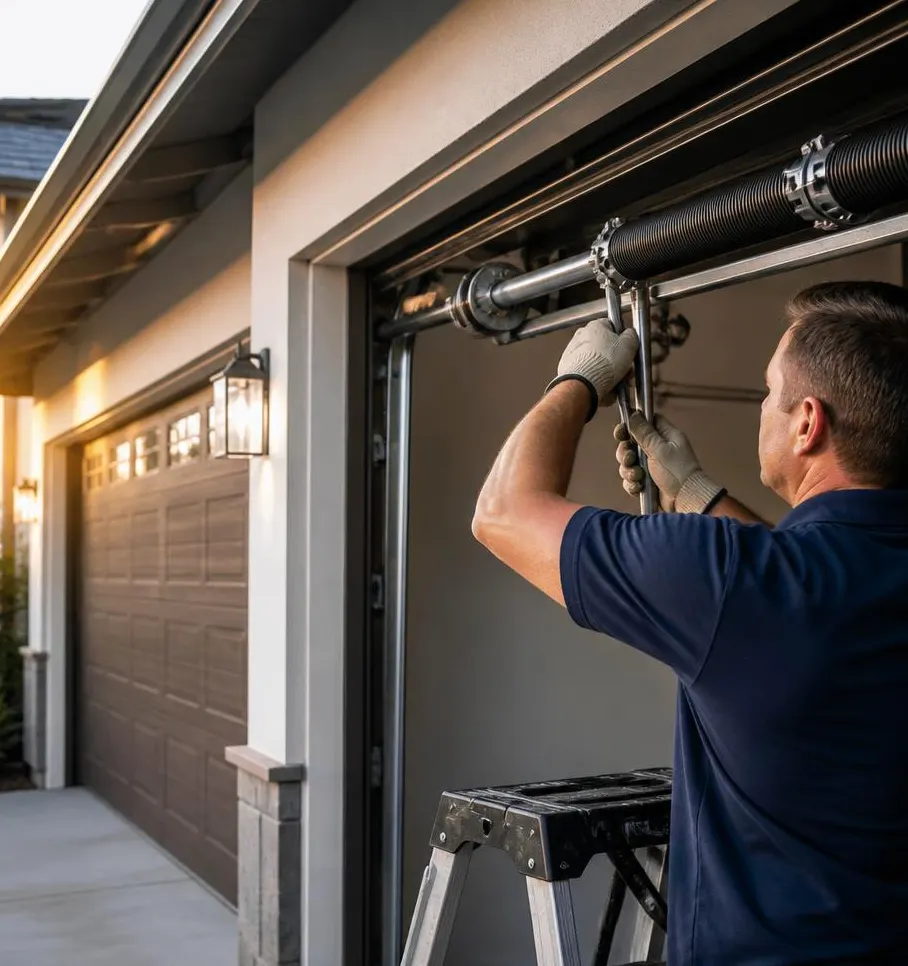
The Short Answer
Most home inspectors give the garage door a quick glance: does it open, does it close, does the light flash when something blocks the sensor. That's it. They rarely check spring tension, hardware rust hidden behind panels, the door's wind-load rating, or whether the opener's safety reverse actually works. In a county with hurricane-season gusts and heavy afternoon humidity, those are the exact things that fail first. Here's what to check yourself before you sign anything.
Walk the Garage: 8 Things to Check
1. Spring Type and Rust
Look above the door for the torsion spring (a thick coil on a metal bar) or check the sides for extension springs (long springs over the tracks). Surface rust is normal; flaking rust, pitting, or a spring with visible gaps between coils means it's stretched or weakening. In homes near standing water or with poor garage ventilation, moisture speeds this up. A failing spring means the door gets heavy fast, and eventually it won't lift at all — or worse, it snaps under tension.
2. Panel Condition, Especially the Bottom Section
Run your hand along the bottom two panels. Soft spots, bubbling paint, or rust blooms mean moisture has gotten into the panel core. This is common on older steel doors that sit through humid summers and storm season without a protective coat. A compromised panel won't hold its shape under wind pressure, which matters when storms roll through.
3. Track Alignment
Stand back and sight down both tracks. They should run perfectly parallel with no visible gaps between the rollers and the track wall. A door that's been knocked off track once often leaves subtle bends that inspectors miss because the door still opens. Over time this causes grinding, uneven wear, and eventually a full derailment.
4. Cables and Pulleys
Look at the cables running down to the bottom brackets. Fraying strands or visible rust on the cable or pulley wheel is a red flag. Cables under tension that snap can cause a sudden, uneven drop of the door — a safety issue, not just a maintenance one.
5. Wind-Load Bracing
Flip the door open and look at the back of the panels for horizontal struts (reinforcement bars). Homes in storm-prone parts of Florida should have doors rated for wind load, with bracing to match. A standard non-reinforced door installed without regard to wind-load rules can buckle inward during high winds, which is a real risk during hurricane season.
6. Weatherstripping and Bottom Seal
Check the rubber seal along the bottom of the door and the vinyl strips on the sides. Cracked, flattened, or missing seals let water in during the afternoon downpours this area gets most summer days. Water intrusion leads to rust on the bottom panel and on the floor-level hardware.
7. Opener Age and Safety Reverse
Place a 2x4 flat on the ground where the door closes. The door should reverse immediately on contact. If it doesn't, the safety sensors or force settings are off — a liability issue, especially with kids or pets in the house. Also ask when the opener was installed; openers over 10-15 years old often lack modern safety features and battery backup, which matters when storms knock out power.
8. Manual Balance Test
Disconnect the opener (pull the red release cord) and lift the door by hand halfway. It should stay in place on its own. If it falls or shoots up, the springs are out of balance, which strains the opener motor and shortens its life.
When to Call Us
If you spot rust on the springs, a door that won't hold its balance, or you're not sure whether the bracing meets wind-load expectations for this area, call Glen Saint Mary Garage Door Service before closing. We handle Garage Door Spring Repair and full Garage Door Tune-Up & Maintenance visits, and we can tell you honestly whether a system has a few good years left or needs replacing before storm season tests it.
Serving Glen Saint Mary, Macclenny, Sanderson, Taylor, Olustee, Lake Butler, Baldwin, and Middleburg — call us for a pre-purchase garage door check so you know exactly what you're buying.